
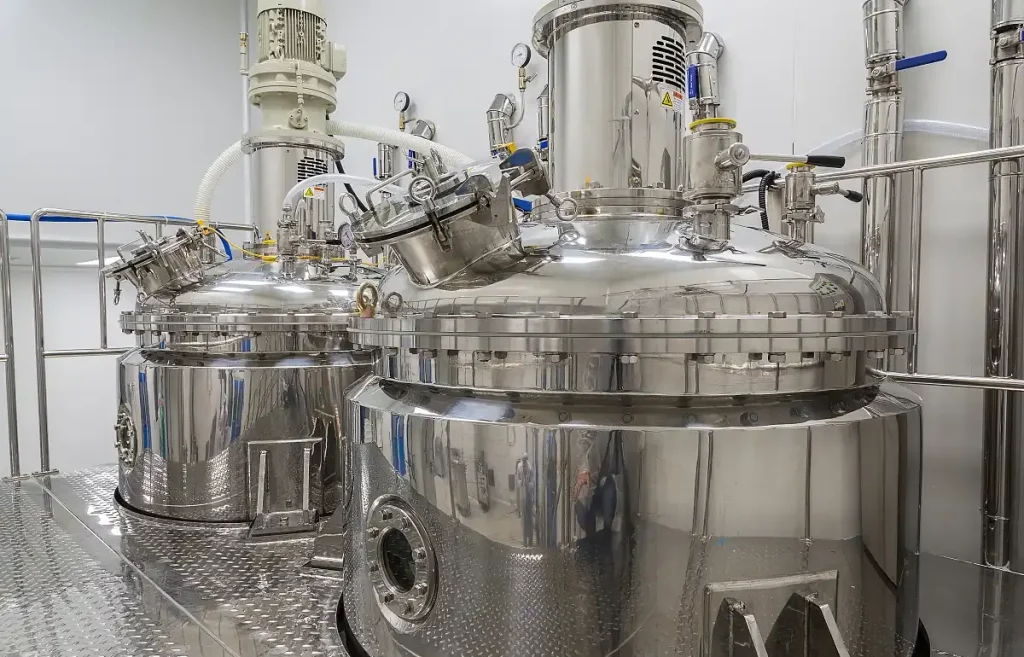
As a core equipment widely used in multiple industries, reaction kettles have formed a variety of types with different structures, materials, and functional configurations to adapt to the diverse needs of different reaction processes, material characteristics, and production scales. From laboratory small-scale reaction vessels to industrial large-scale reaction systems, from atmospheric pressure reaction kettles to high-pressure autoclaves, from ordinary carbon steel reaction kettles to corrosion-resistant enamel reaction kettles, the classification of reaction kettles is based on multiple dimensions, and each type has unique characteristics and applicable scenarios. For enterprises and R&D institutions, selecting a suitable reaction kettle is crucial to ensuring production efficiency, product quality, and operational safety. It not only needs to match the actual reaction requirements but also consider factors such as cost, maintenance, and environmental protection. Therefore, it is necessary to systematically sort out the classification of reaction kettles, analyze their characteristics, and summarize scientific selection criteria.
The classification of reaction kettles can be carried out from multiple dimensions, including material, structure, working pressure, working temperature, operation mode, and application field. Among them, material classification, structure classification, working pressure classification, and operation mode classification are the most common and practical, which directly determine the performance and application scope of the reaction kettle.
First, according to the material of the kettle body, reaction kettles can be divided into metal reaction kettles, non-metal reaction kettles, and composite material reaction kettles. Metal reaction kettles are the most widely used type in industrial production, with excellent mechanical properties, high-temperature resistance, and pressure resistance, and can be divided into carbon steel reaction kettles, stainless steel reaction kettles, titanium alloy reaction kettles, and other special metal reaction kettles according to the type of metal. Carbon steel reaction kettles are made of ordinary carbon steel, which has the advantages of low cost, easy processing, and high mechanical strength, but poor corrosion resistance. They are suitable for reactions involving non-corrosive materials, such as the mixing and reaction of oil products, water-soluble non-corrosive materials, and are widely used in the chemical industry, metallurgy, and other fields. However, carbon steel reaction kettles are not suitable for reactions involving acids, alkalis, and other corrosive materials, otherwise, the kettle body will be corroded, leading to material leakage and equipment damage.
Stainless steel reaction kettles are the most widely used type of metal reaction kettles, mainly made of 304, 316L, and other stainless steel materials. 304 stainless steel has good corrosion resistance and non-toxicity, suitable for the food, pharmaceutical, and daily chemical industries; 316L stainless steel has stronger corrosion resistance, especially resistance to corrosion by chloride ions, and is suitable for reactions involving strong corrosive materials (such as seawater, hydrochloric acid dilute solution) and high-purity product production. Stainless steel reaction kettles have the advantages of easy cleaning, beautiful appearance, long service life, and can be used for both atmospheric pressure and pressure reactions. They are currently the preferred equipment for most industries such as pharmaceuticals, food, and fine chemicals. The nominal capacity of stainless steel reaction kettles usually ranges from 50L to 5000L, the jacket capacity ranges from 95L to 1400L, and the motor power is between 0.6KW and 7.5KW, which can meet the needs of different production scales.
Titanium alloy reaction kettles are made of titanium and titanium alloys, which have excellent corrosion resistance, high-temperature resistance, and low density. They can resist the corrosion of most strong acids, strong alkalis, and oxidants (such as concentrated sulfuric acid, nitric acid, and chlorine gas), and are suitable for harsh reaction environments such as high temperature, high pressure, and strong corrosion. However, titanium alloy materials are expensive, and the processing difficulty is large, so the cost of titanium alloy reaction kettles is relatively high, and they are mainly used in high-end fields such as aerospace, nuclear industry, and special chemicals.
Non-metal reaction kettles mainly include glass reaction kettles, enamel reaction kettles, and plastic reaction kettles. Glass reaction kettles are made of high borosilicate glass, which has good transparency, corrosion resistance, and non-toxicity. The reaction process inside the kettle can be directly observed, which is suitable for laboratory R&D, small-scale production, and reactions requiring high purity of products (such as pharmaceutical intermediates, fine chemicals). However, glass reaction kettles have poor mechanical properties, are fragile, and cannot withstand high pressure and high temperature. The maximum working pressure is usually not more than 0.1MPa, and the maximum working temperature is not more than 200°C.
Enamel reaction kettles (also known as glass-lined reaction kettles) are made by sintering enamel (glass lining) on the inner surface of a carbon steel or stainless steel kettle body. They combine the advantages of metal materials (high mechanical strength, pressure resistance) and glass materials (corrosion resistance, non-toxicity), and are suitable for reactions involving strong acids, strong alkalis, and other corrosive materials. They are widely used in the chemical, pharmaceutical, food, and other industries. The inner vessel design pressure of enamel reaction kettles is usually between -0.1MPa and 1.6MPa, the inner vessel temperature range is -19°C to 200°C, the jacket design pressure is 0 to 4MPa, and the jacket temperature range is -19°C to 260°C, with a capacity range of 20L to 50000L, which can meet the needs of small-scale R&D to large-scale production. However, the enamel layer is brittle and easy to fall off if subjected to impact or uneven heating, so attention should be paid to avoiding collision and rapid temperature change during use.
Plastic reaction kettles are made of corrosion-resistant plastics (such as PP, PE, PTFE), which have excellent corrosion resistance and low cost, but poor high-temperature resistance and pressure resistance. They are suitable for low-temperature, atmospheric pressure, and non-toxic corrosion reactions, such as the mixing and reaction of dilute acids, dilute alkalis, and are widely used in the environmental protection, water treatment, and other fields.
Composite material reaction kettles are made of multiple materials, such as carbon fiber composite reaction kettles, which have the advantages of light weight, high strength, corrosion resistance, and high-temperature resistance. They are suitable for special fields such as aerospace and new energy, but the cost is high and the application scope is relatively narrow.
Second, according to the structural form, reaction kettles can be divided into open reaction kettles, closed reaction kettles, vertical reaction kettles, and horizontal reaction kettles. Open reaction kettles have an open top (equipped with a detachable cover), simple structure, convenient feeding, discharging, and cleaning, but poor sealing performance. They are suitable for atmospheric pressure, low-temperature reactions, and reactions that do not require strict sealing (such as the mixing of ordinary materials, dissolution reaction). Open flat cover reaction kettles are a common type, which are easy to maintain and suitable for atmospheric or low-pressure reactions such as food additive mixing and low-viscosity material stirring.
Closed reaction kettles have a fully sealed structure, good sealing performance, and can withstand a certain pressure and temperature. They are suitable for pressure reactions, vacuum reactions, and reactions involving flammable, explosive, toxic, or volatile materials. Closed high-pressure reaction kettles can withstand pressure up to 25MPa and temperature up to 350°C, supporting complex reactions such as lignin hydrodeoxygenation. They are usually equipped with tenon groove sealing, high-temperature resistant steel heating rings, and program temperature control systems to ensure reaction safety and stability. Closed reaction kettles are the most widely used structural type in industrial production, and their kettle cover is usually connected to the kettle body by flanges, with a sealing gasket or mechanical seal to ensure sealing performance.
Vertical reaction kettles have a vertical structure, small floor area, reasonable flow field inside the kettle, and good mixing effect. They are suitable for most reaction scenarios, especially large-scale production. Most of the reaction kettles used in industrial production are vertical structures. Horizontal reaction kettles have a horizontal structure, large volume, convenient feeding and discharging of solid materials, and are suitable for reactions involving a large amount of solid materials or slurry materials (such as the reaction of coal slime, ore pulp), but they occupy a large floor area and have a relatively poor mixing effect compared with vertical reaction kettles.
In addition, there are some special structural reaction kettles, such as magnetic drive reaction kettles and quadruple high-throughput reaction kettles. Magnetic drive reaction kettles eliminate the leakage risk of dynamic sealing, are suitable for high-purity chemical production, and are widely used in semiconductor grade reagent synthesis and biopharmaceutical sterile reactions. Quadruple high-throughput reaction kettles integrate four sets of independent reaction units, which can reduce energy consumption by 30% and improve space utilization by 50%. They are mainly used for catalyst screening and process parameter optimization, which can effectively shorten the R&D cycle.
Third, according to the working pressure, reaction kettles can be divided into atmospheric pressure reaction kettles, low-pressure reaction kettles, medium-pressure reaction kettles, and high-pressure reaction kettles. Atmospheric pressure reaction kettles work at normal atmospheric pressure (0.1MPa), with simple structure, low cost, and suitable for reactions that do not require pressure control (such as dissolution, mixing, neutralization reaction at normal temperature). Low-pressure reaction kettles work at a pressure of 0.1MPa to 1.6MPa, which are suitable for most chemical reactions and are widely used in the chemical, pharmaceutical, and food industries. Medium-pressure reaction kettles work at a pressure of 1.6MPa to 10MPa, which are suitable for reactions requiring a certain pressure (such as hydrogenation, oxidation reaction). High-pressure reaction kettles work at a pressure of more than 10MPa, which are suitable for harsh reaction environments (such as high-pressure hydrogenation, polymerization reaction). They have high requirements on the material and structure of the kettle body, and need to be equipped with a complete safety protection system (such as safety valve, pressure relief device, explosion-proof device) to ensure operational safety.
Fourth, according to the operation mode, reaction kettles can be divided into batch reaction kettles, continuous reaction kettles, and semi-continuous reaction kettles. Batch reaction kettles are the most widely used type, which adopt a batch operation mode: feeding, reaction, discharge, and cleaning are carried out in cycles. They have the advantages of flexible operation, strong adaptability, and suitable for small-scale production, multi-variety production, and complex reactions (such as multi-step synthesis reaction). Batch reaction kettles are easy to control reaction parameters and are suitable for specialty chemicals, custom pharmaceuticals, and R&D laboratories, but their productivity is relatively low due to the downtime between batches, and the operation is labor-intensive.
Continuous reaction kettles adopt a continuous operation mode: reactants are continuously fed into the kettle, and products are continuously discharged from the kettle, with the reaction process in a stable state. They have the advantages of high production efficiency, stable product quality, and low labor cost, and are suitable for large-scale continuous production (such as bulk chemical production, polymerization reaction of plastics, and wastewater treatment). However, continuous reaction kettles have high requirements on the stability of the reaction process and are not suitable for multi-variety production or complex reactions. Continuous stirred tank reactors (CSTR) are a common type of continuous reaction kettle, which have the advantages of high throughput and stable output, but are less suitable for slow or complex reactions, and there may be product back-mixing problems, with higher initial investment costs.
Semi-continuous reaction kettles combine the characteristics of batch and continuous reaction kettles: part of the reactants are fed in batches, and part of the reactants are fed continuously, or products are discharged continuously during the reaction process. They have a certain flexibility and production efficiency, and are suitable for reactions with uneven reaction rates or reactions requiring continuous addition of reactants (such as oxidation reaction, polymerization reaction with chain transfer agent).
On the basis of understanding the classification and characteristics of reaction kettles, the selection of reaction kettles needs to follow scientific criteria, comprehensively considering multiple factors such as reaction process requirements, material characteristics, production scale, safety, cost, and environmental protection. The specific selection steps can be summarized as follows: first, clarify the reaction process parameters, including working pressure, working temperature, reaction type (exothermic, endothermic, catalytic, etc.), reaction time, and mixing requirements, which are the basis for selecting the structure and performance of the reaction kettle. For example, if the reaction is a high-pressure exothermic reaction, a closed high-pressure reaction kettle with a complete cooling system and safety protection system should be selected; if the reaction requires observing the internal reaction process, a glass reaction kettle or a stainless steel reaction kettle with a sight glass should be selected.
Second, according to the characteristics of reactants and products, select the appropriate kettle body material. If the reactants are strong corrosive materials (such as strong acids, strong alkalis), enamel reaction kettles, stainless steel (316L) reaction kettles, or titanium alloy reaction kettles should be selected; if the products are food or pharmaceuticals, non-toxic, easy-to-clean stainless steel or glass reaction kettles should be selected; if the materials are non-corrosive and the cost is limited, carbon steel reaction kettles can be selected. It should be noted that the material selection should also consider the compatibility between the material and the reactants/products to avoid material corrosion or chemical reactions affecting product quality.
Third, determine the type and specifications of the reaction kettle according to the production scale. For laboratory R&D or small-scale production (capacity less than 100L), small glass reaction kettles or stainless steel reaction kettles can be selected; for medium-scale production (capacity 100L to 1000L), vertical closed stainless steel or enamel reaction kettles can be selected; for large-scale production (capacity more than 1000L), large-scale vertical closed reaction kettles with automatic control systems can be selected. At the same time, the volume of the reaction kettle should be determined according to the amount of reactants and the expansion space required for the reaction (usually, the filling coefficient of the reaction kettle is 0.7 to 0.8, and for reactions with foaming or gas generation, the filling coefficient should be appropriately reduced to 0.5 to 0.6).
Fourth, consider the safety and environmental protection requirements. For reactions involving flammable, explosive, toxic, or volatile materials, a closed reaction kettle with a good sealing system, inert gas protection system, and safety relief device should be selected; for reactions involving harmful by-products, a reaction kettle with a tail gas collection system should be selected to avoid environmental pollution. At the same time, the reaction kettle should meet the relevant national safety standards and be equipped with complete safety monitoring instruments (such as temperature gauge, pressure gauge, safety valve) to ensure operational safety.
Fifth, comprehensively consider factors such as cost, maintenance, and after-sales service. Under the premise of meeting the reaction requirements, select the reaction kettle with reasonable cost and easy maintenance; pay attention to the after-sales service of the equipment manufacturer, such as installation, commissioning, maintenance, and replacement of wearing parts, to ensure the long-term stable operation of the equipment. For example, although titanium alloy reaction kettles have excellent performance, their cost is high, so if the reaction conditions can be met by stainless steel reaction kettles, stainless steel reaction kettles should be preferred to reduce investment costs.
In summary, the classification of reaction kettles is diverse, and each type has unique characteristics and applicable scenarios. The selection of reaction kettles is a systematic work that needs to comprehensively consider the reaction process, material characteristics, production scale, safety, cost, and other factors. Only by selecting a suitable reaction kettle can we ensure the efficiency, quality, and safety of production, reduce production costs, and promote the healthy development of the enterprise. With the continuous progress of technology, new types of reaction kettles (such as intelligent reaction kettles, energy-saving reaction kettles) are constantly emerging, which will provide more choices for industrial production and R&D.